Guides · Exceptions
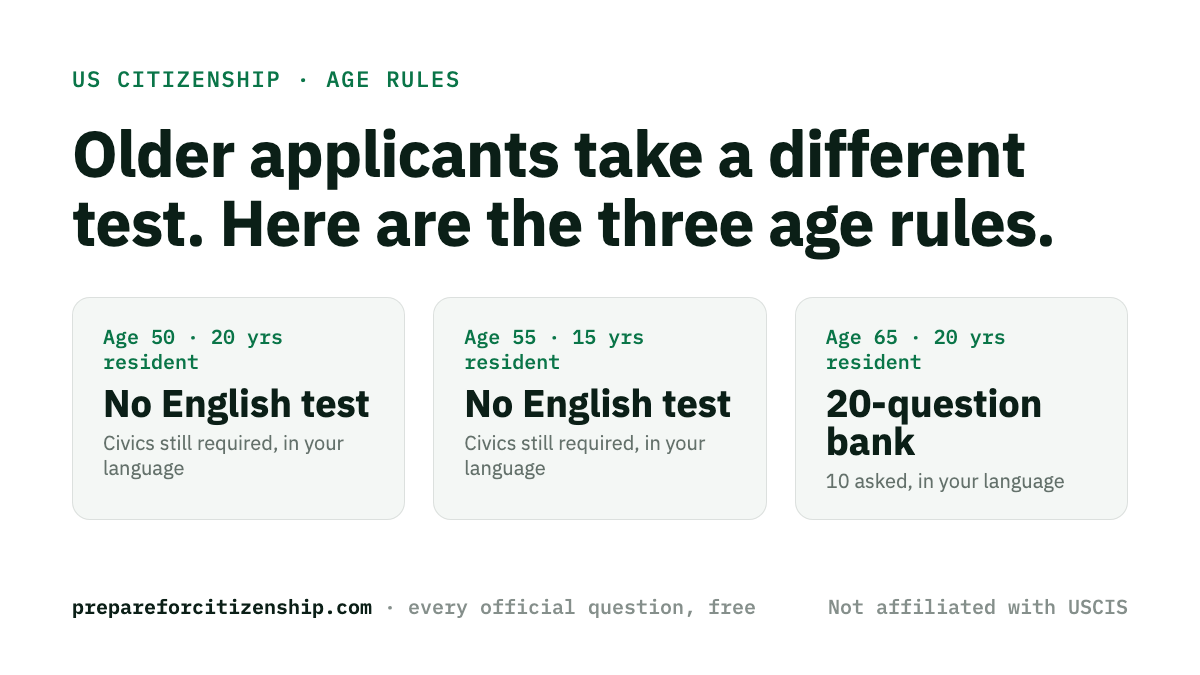
Older applicants take a different test. Here are the three age rules.
At 50/20 and 55/15 there is no English test. At 65/20 the civics test shrinks to a bank of 20. What each rule means and what still applies.
Every few days someone posts a version of the same worry: my mother is 68, her English is limited, will she fail the interview? Very often the answer is that she is not taking the test they are imagining. USCIS has three age-and-residency rules that change what older applicants face, and they are not widely understood.
The three rules
Age and years as a lawful permanent resident are both counted as of the date you file the N-400.
| You are | And have been a permanent resident | English test | Civics test |
|---|---|---|---|
| 50 or older | 20 years or more | Exempt | Required, in your own language |
| 55 or older | 15 years or more | Exempt | Required, in your own language |
| 65 or older | 20 years or more | Exempt | Shorter version, in your own language |
50/20 and 55/15: no English test
If you meet either rule, you skip the English reading, writing and speaking tests entirely. You still take the civics test, but you may take it in the language of your choice. USCIS asks you to bring a qualified interpreter to the interview for that.
The civics test itself is the full version for your filing date: the 2008 pool if USCIS received your N-400 before October 20, 2025, the 2025 pool if on or after.
65/20: the shorter civics test
If you are 65 or older with 20 or more years as a permanent resident, you also skip the English test, and your civics test is drawn from a specially marked bank of 20 questions instead of the full pool. The officer asks up to 10 of them and you need 6 correct. USCIS marks these questions on its own lists, and they are marked in our study material, so you can study just those 20.
Which bank of 20 you get, 2008 or 2025, still follows your N-400 received date.
What does not change
The interview still happens in person, and the officer still goes through the N-400 with you, through an interpreter where the exemption applies. The oath of allegiance is still required. The exemptions are about the tests, not the process.
A fourth route: medical exceptions
Separately from age, an applicant with a physical or developmental disability or a mental impairment that prevents them from learning English or civics can request an exception on Form N-648, completed by a licensed medical professional. This is a medical and legal matter, not a study matter, and belongs with a lawyer.
What this means for the family
If you are helping a parent prepare, do these in order.
- Check the received date on the I-797C to fix the version.
- Check their age and years as a resident on that date against the table above.
- If they qualify for 65/20, study only the marked 20 questions, in the language they will answer in.
Twenty questions is a very different project from 128.
Frequently asked questions
What is the 50/20 rule for the citizenship test?
If you are 50 or older at filing and have been a lawful permanent resident for 20 years or more, you are exempt from the English test and may take the civics test in your own language with an interpreter you bring.
What is the 55/15 rule for the citizenship test?
If you are 55 or older at filing and have been a lawful permanent resident for 15 years or more, you are exempt from the English test and may take the civics test in your own language with an interpreter you bring.
What is the 65/20 rule for the citizenship test?
If you are 65 or older at filing and have been a lawful permanent resident for 20 years or more, you are exempt from the English test and take a shorter civics test: up to 10 questions from a marked bank of 20, with 6 correct to pass.
Does a 50/20 or 55/15 applicant still take the civics test?
Yes. The English exemptions do not remove the civics test. It is the full test for your filing date, taken in the language of your choice.
Study the official questions, free
Both versions of the civics test, the answers for your state, and practice tests in the real format with the real pass line.
Prepare for Citizenship teaches the test; it does not advise on applications. Anything about your own case belongs with your lawyer or USCIS. Spotted something wrong? Tell us.