Home / Guides
Guides
The US citizenship test, explained in plain English
Which version you take, what the interview is like, how the English test is scored, what to answer for your state, and who is exempt. Every guide is checked against USCIS's own pages, and the date it was last checked is on the page. None of it is legal advice.
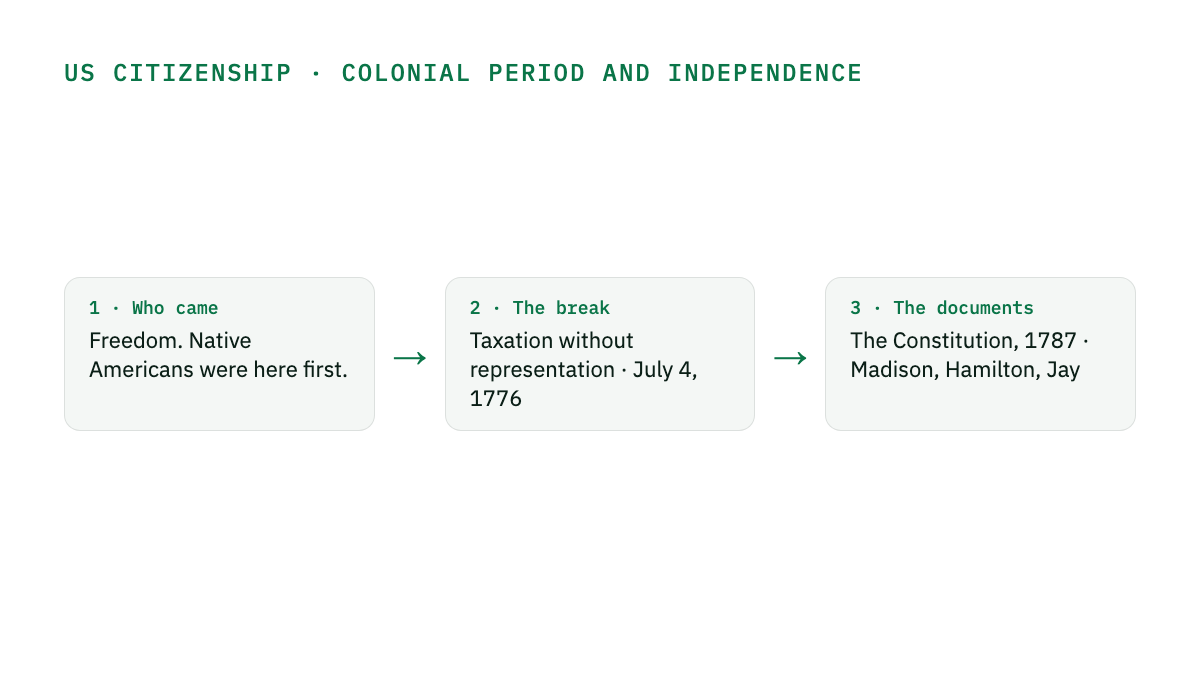
Colonial Period and Independence: 17 questions, one story from 1607 to 1787
Why the colonists came, who was here first, why they broke with Britain, and the six men who wrote the founding documents. The whole section, with accepted answers.
Read the guide →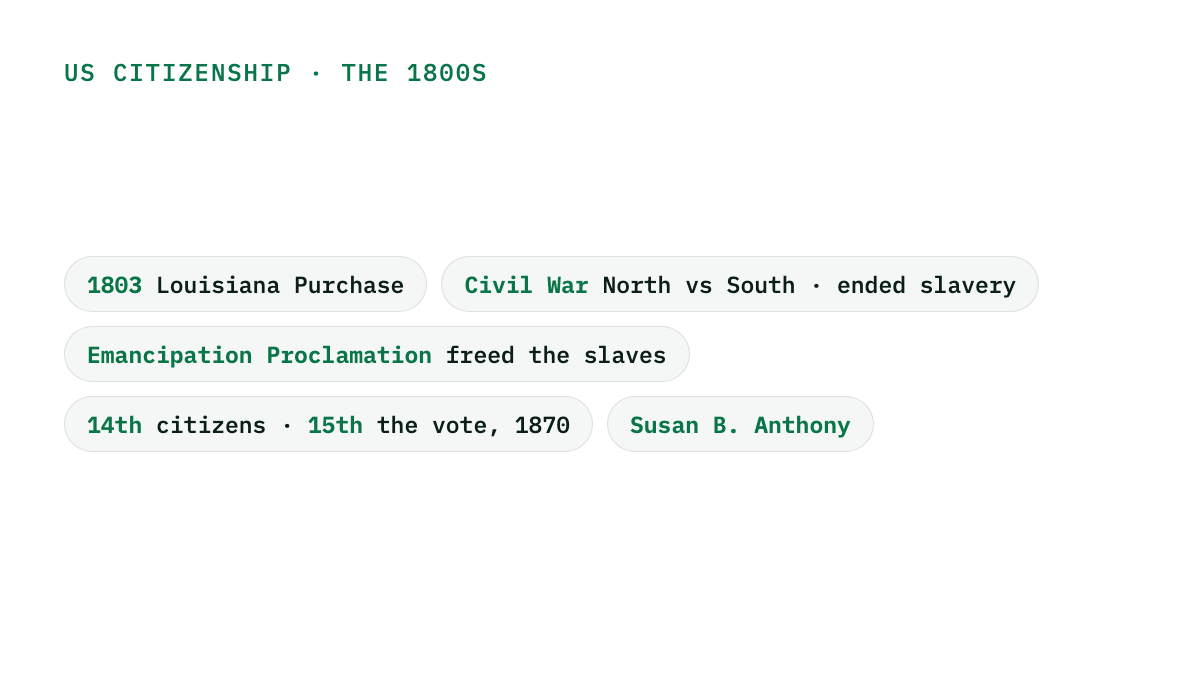
The 1800s section: 10 questions, and eight of them are the Civil War
The Louisiana Purchase, the Civil War from Fort Sumter to the 15th Amendment, and the women who fought for the vote. The shortest history section, with accepted answers.
Read the guide →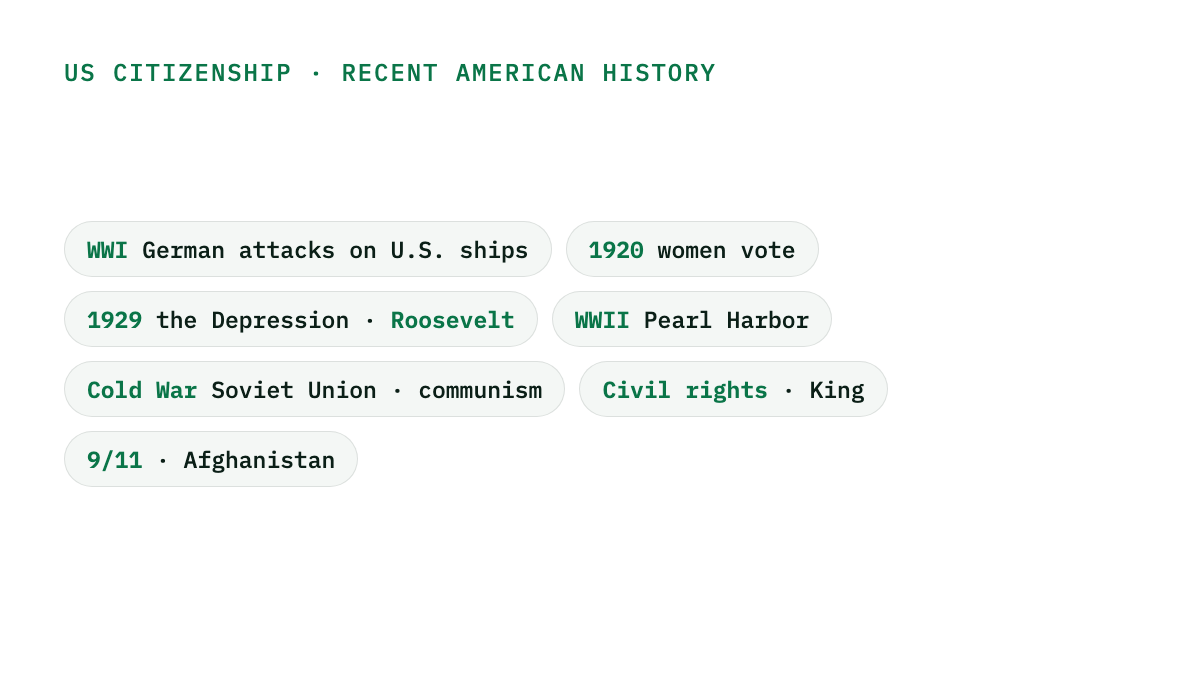
Recent American History: 17 questions from World War I to September 11
Two world wars, the Depression, the Cold War, civil rights and 2001. The last history section, in the order it happened, with the accepted answer for each.
Read the guide →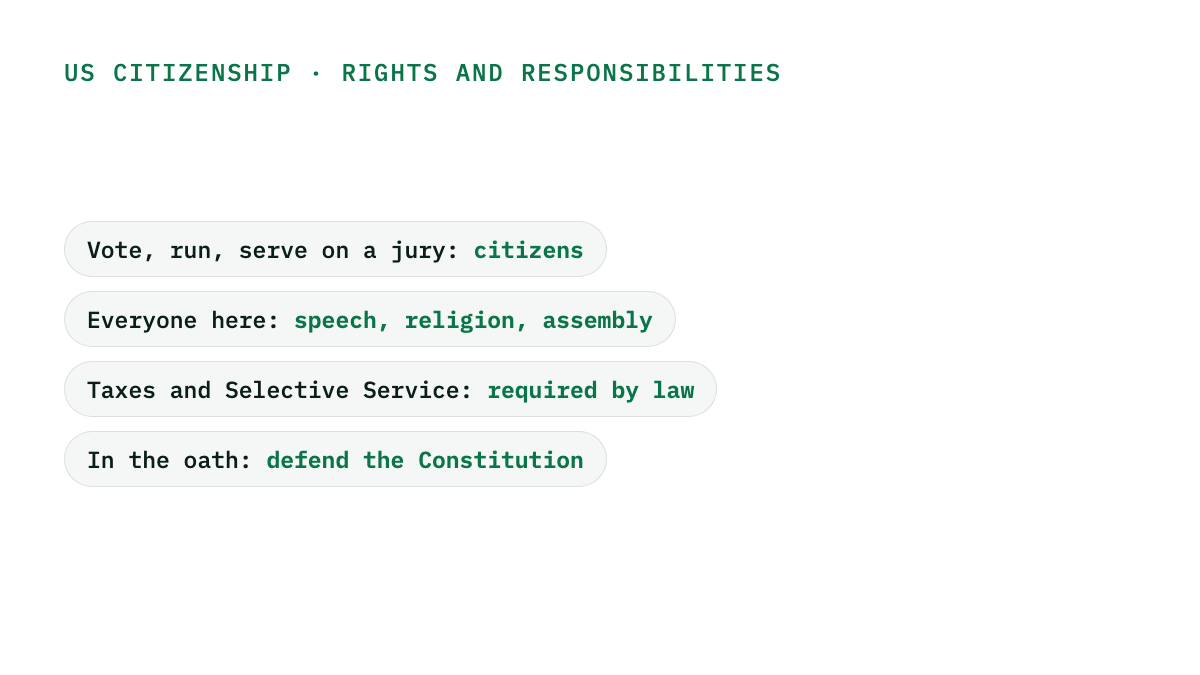
Rights and responsibilities: the 10 questions about what citizenship gives and asks
Who can vote, what everyone in the country is entitled to, what new citizens promise in the oath, and why you pay taxes. The whole section, with the accepted answers.
Read the guide →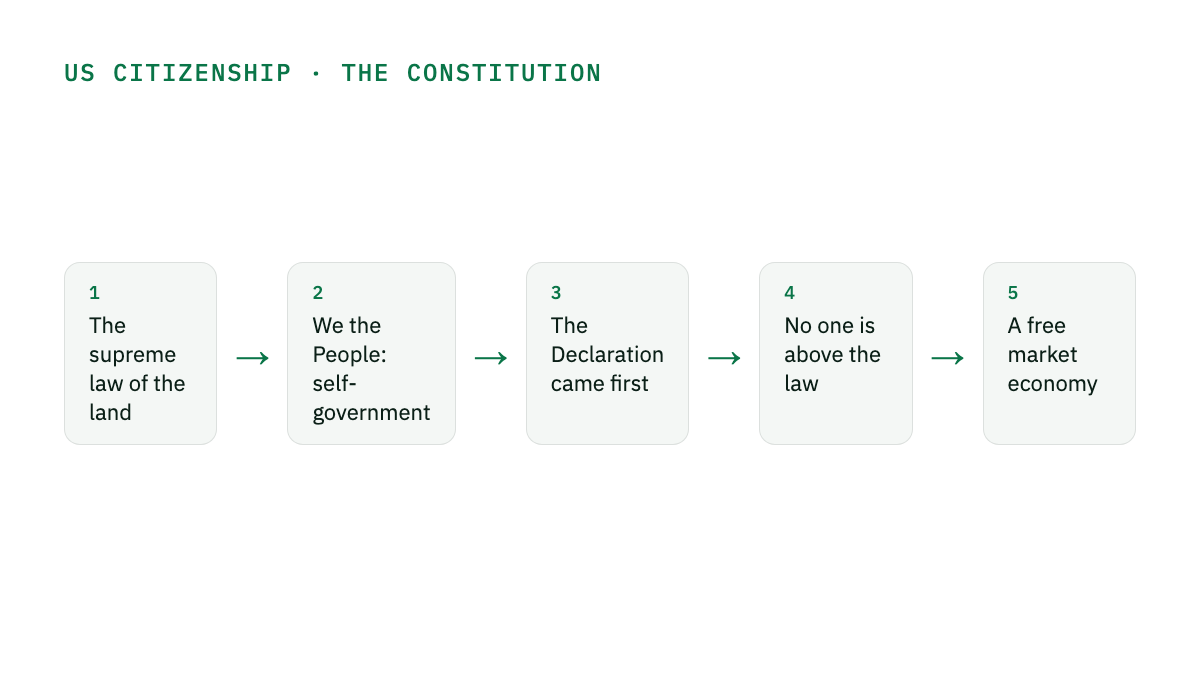
The Constitution section: 15 questions, 5 ideas
Supreme law, We the People, the Bill of Rights, the rule of law and why three branches. The first section of the test, and the ideas that make it one story.
Read the guide →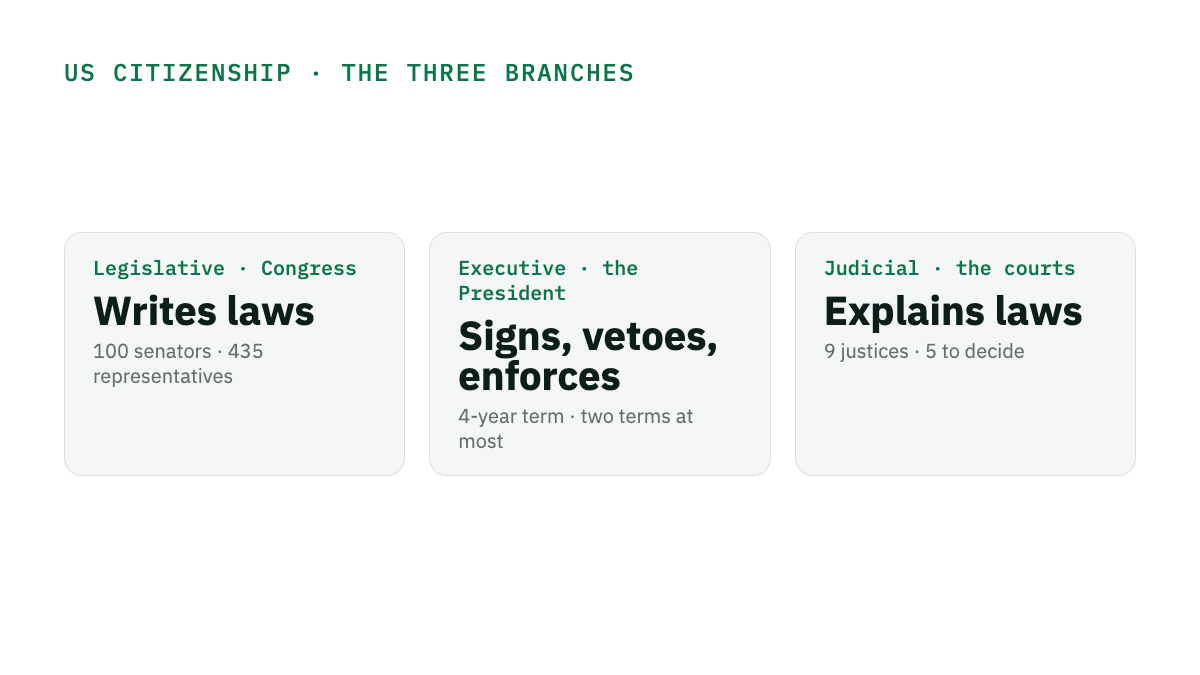
The three branches on one page: who writes, who signs, who judges
System of Government is 47 questions, the biggest section on the test. Almost all of it is three branches doing three jobs. The structure, with the accepted answers.
Read the guide →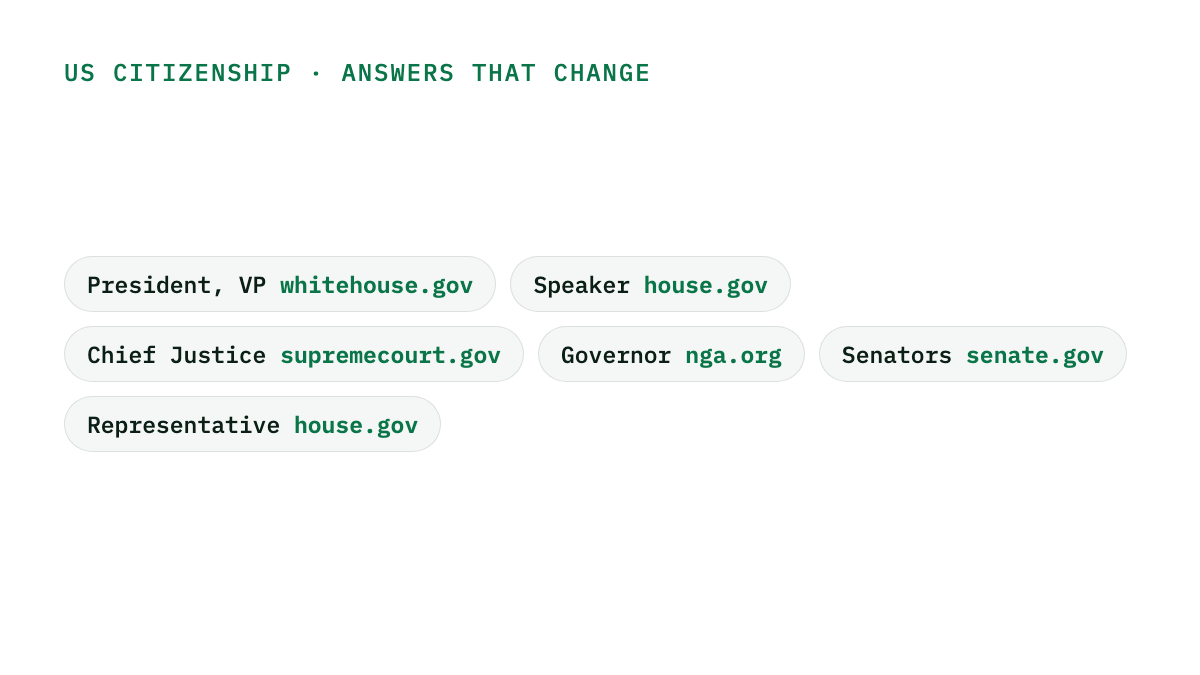
Eight civics answers that change, and where to check each one the week of your interview
The President, the Vice President, the Speaker, the Chief Justice, your governor, your senator, your representative, your capital. The official sources for each.
Read the guide →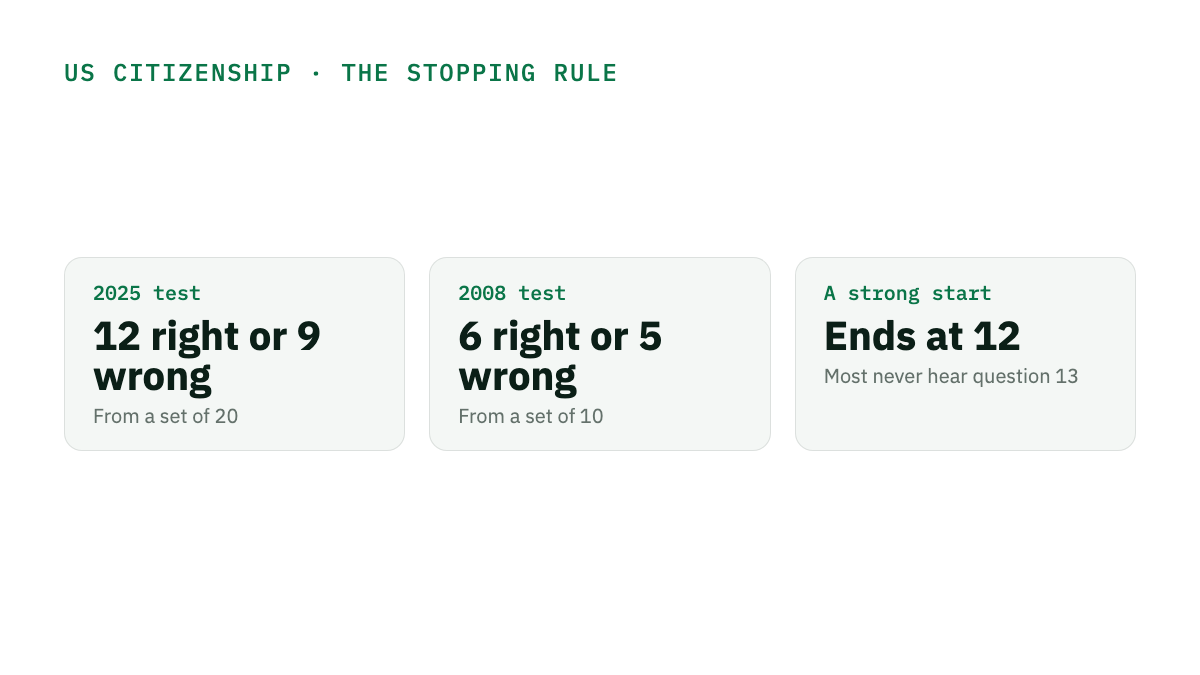
You may only be asked 12 questions: how the civics test stops early, and why your practice should too
The officer stops at 12 right or 9 wrong on the 2025 test, 6 right or 5 wrong on the 2008 test. What that means for how long the test is and how you should practice.
Read the guide →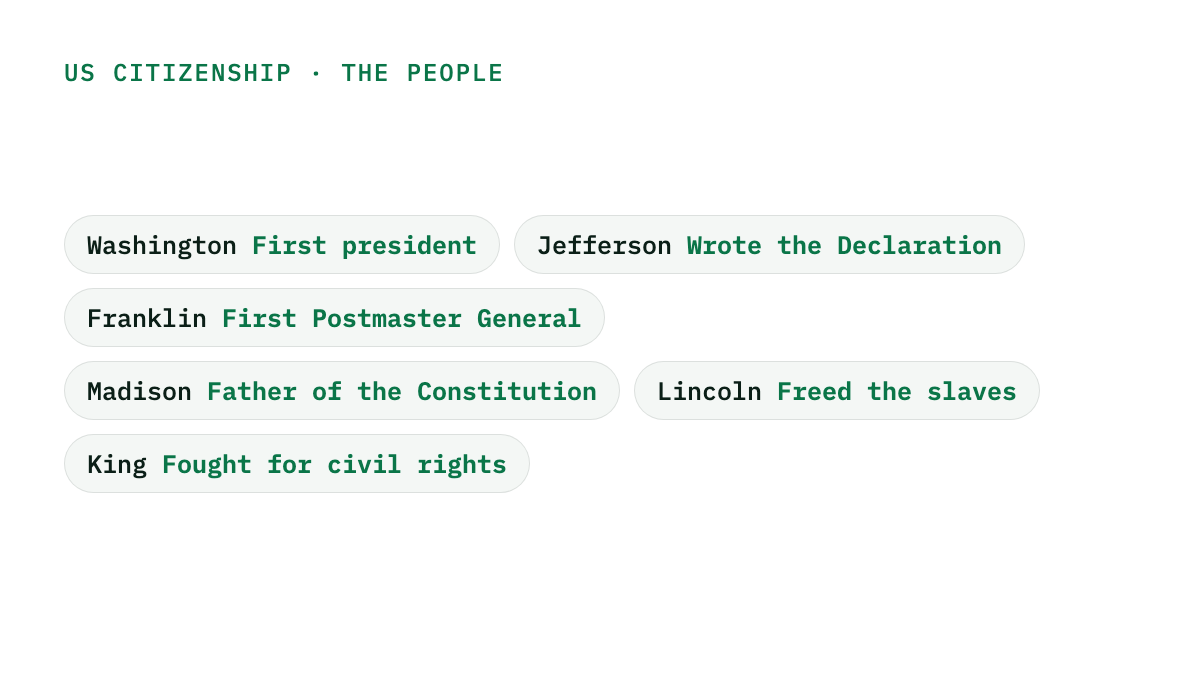
Every person named on the civics test, and one thing to say about each
Fifteen names appear in the 2025 questions. For each one, the shortest accepted answer, so you never have to choose in the room.
Read the guide →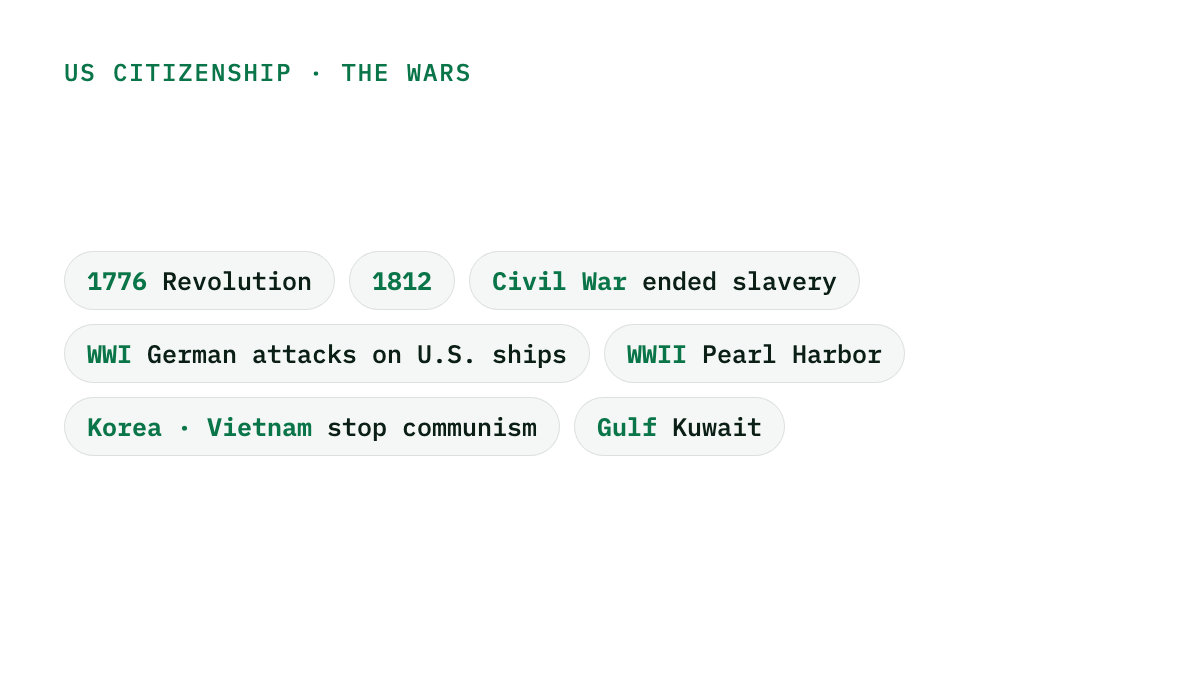
Every war on the civics test, in order, with the one fact the test wants
From the Revolution to the War on Terror: which wars the 2025 test asks about, what it asks, and the accepted answer for each.
Read the guide →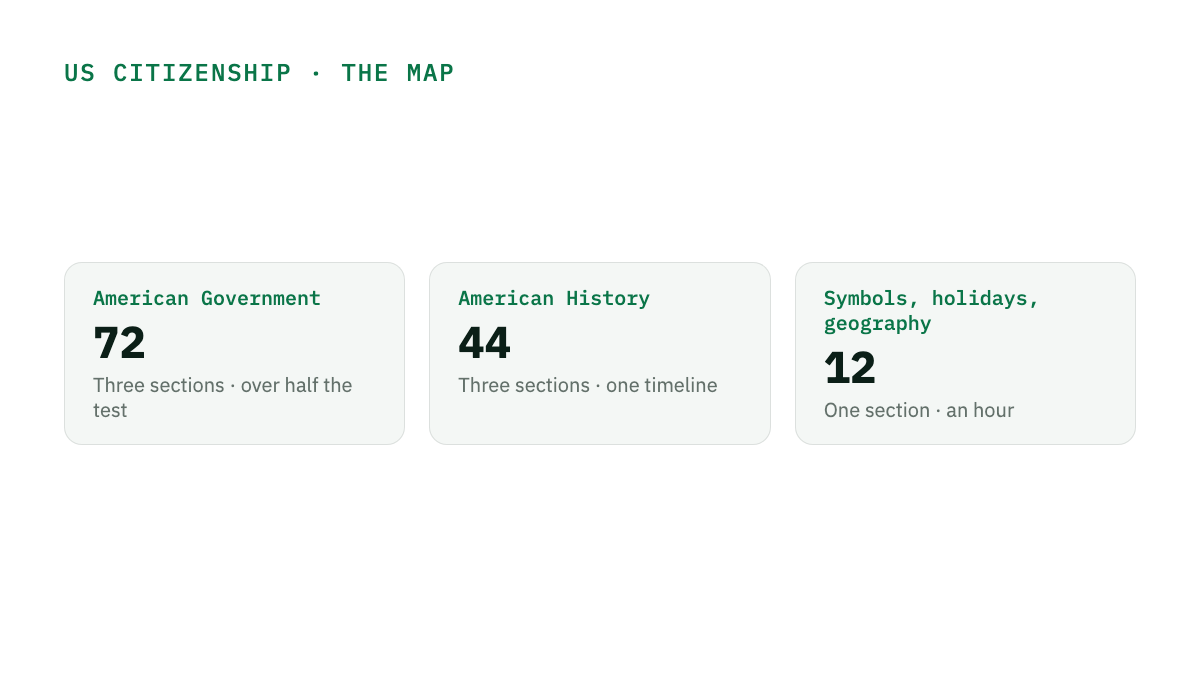
The map of the 2025 civics test: seven sections, and where your study time should go
72 questions on government, 44 on history, 12 on symbols and geography. What each section covers and how much of your time it deserves.
Read the guide →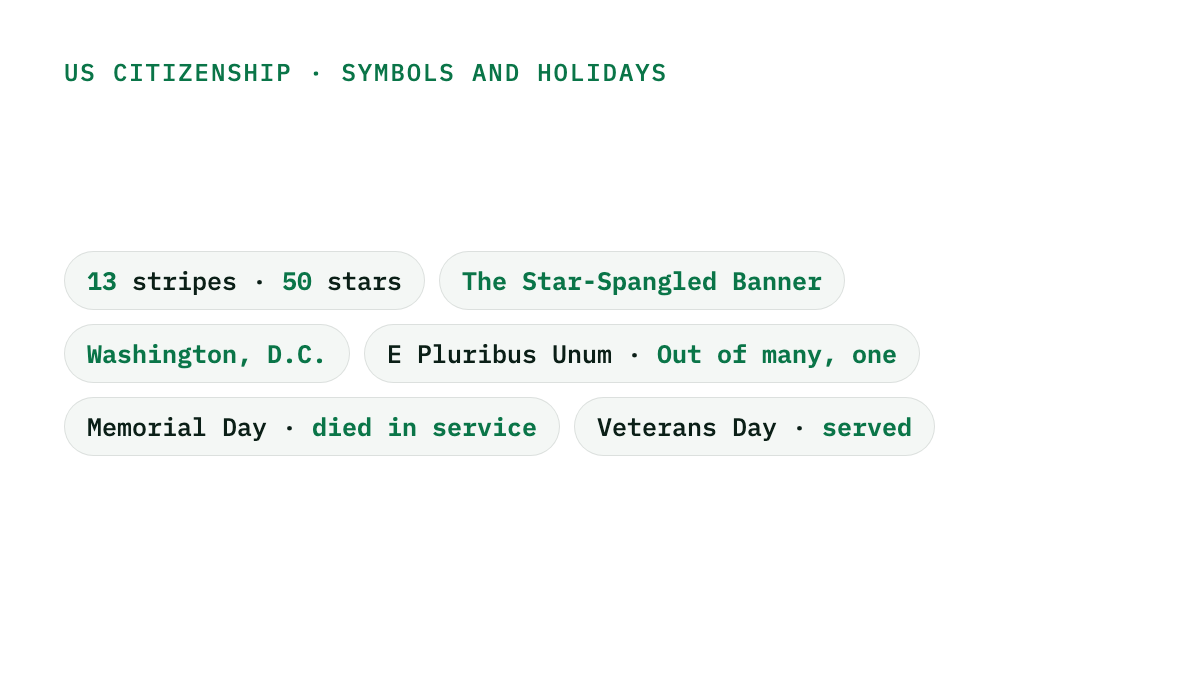
The 12 easiest points on the civics test: symbols, holidays and geography
The last section of the 2025 test is short and friendly. All twelve questions, with the answers, in an hour.
Read the guide →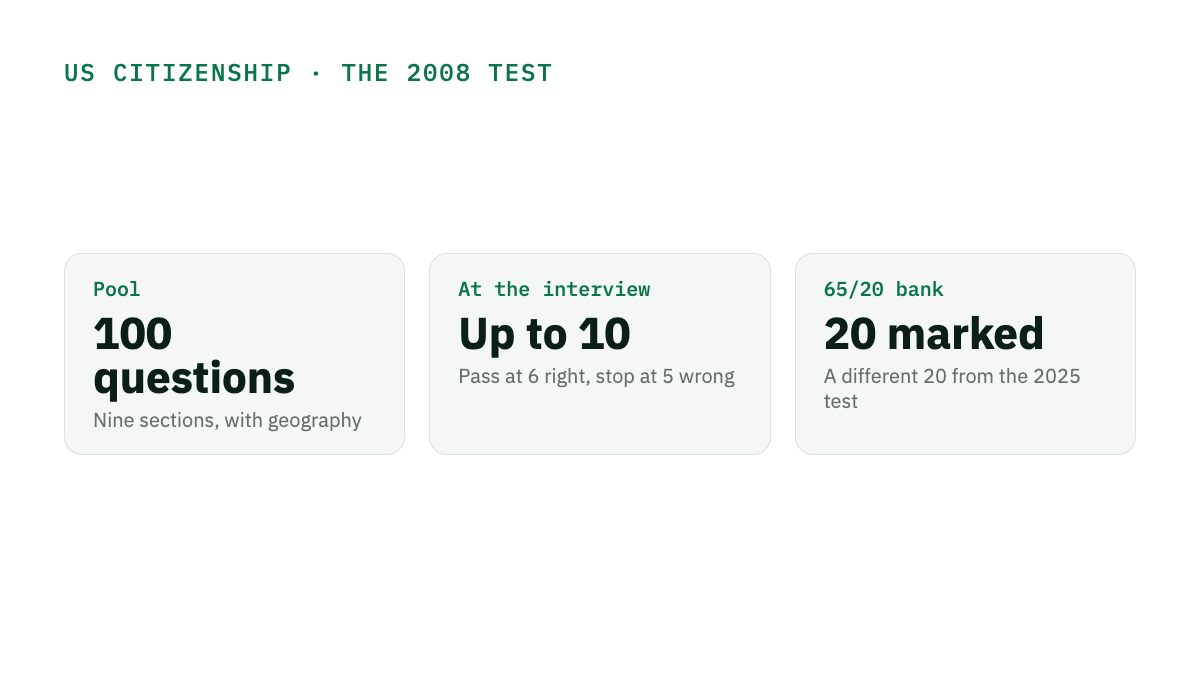
Filed before October 20, 2025? The 2008 civics test, on one page
If USCIS received your N-400 before the cutover you take the older test: 100 questions, 10 asked, 6 to pass, nine sections. The rules and the shape of it.
Read the guide →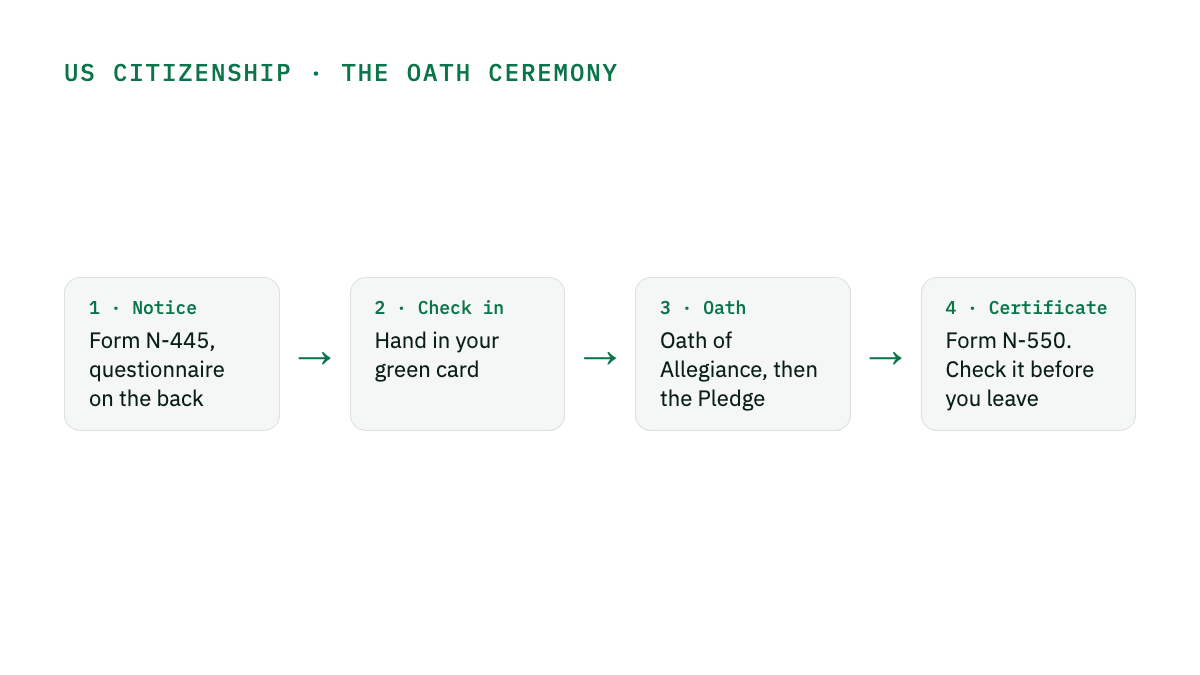
You passed. Here is what happens at the oath ceremony.
The N-445 notice, the questionnaire on the back, what you hand in, what you get, and the three things to do in the week after.
Read the guide →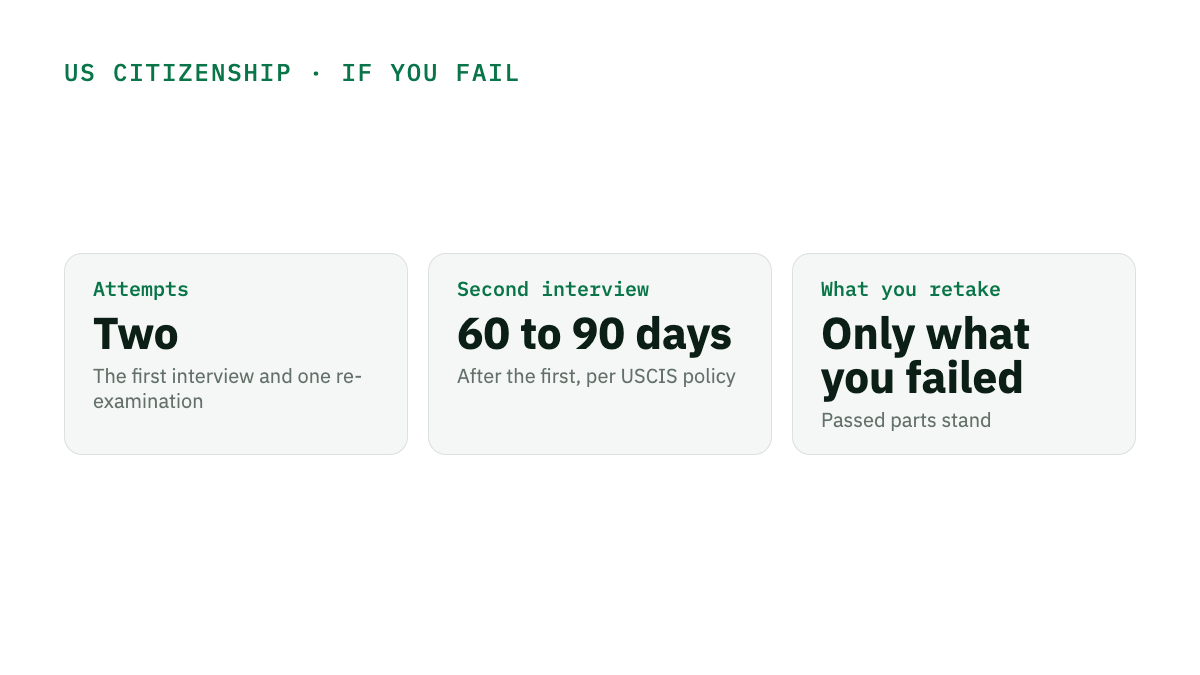
Failed part of the test? Exactly what happens next.
Two chances, a second interview 60 to 90 days later, only the part you missed, and what a second failure means, all from USCIS's own policy.
Read the guide →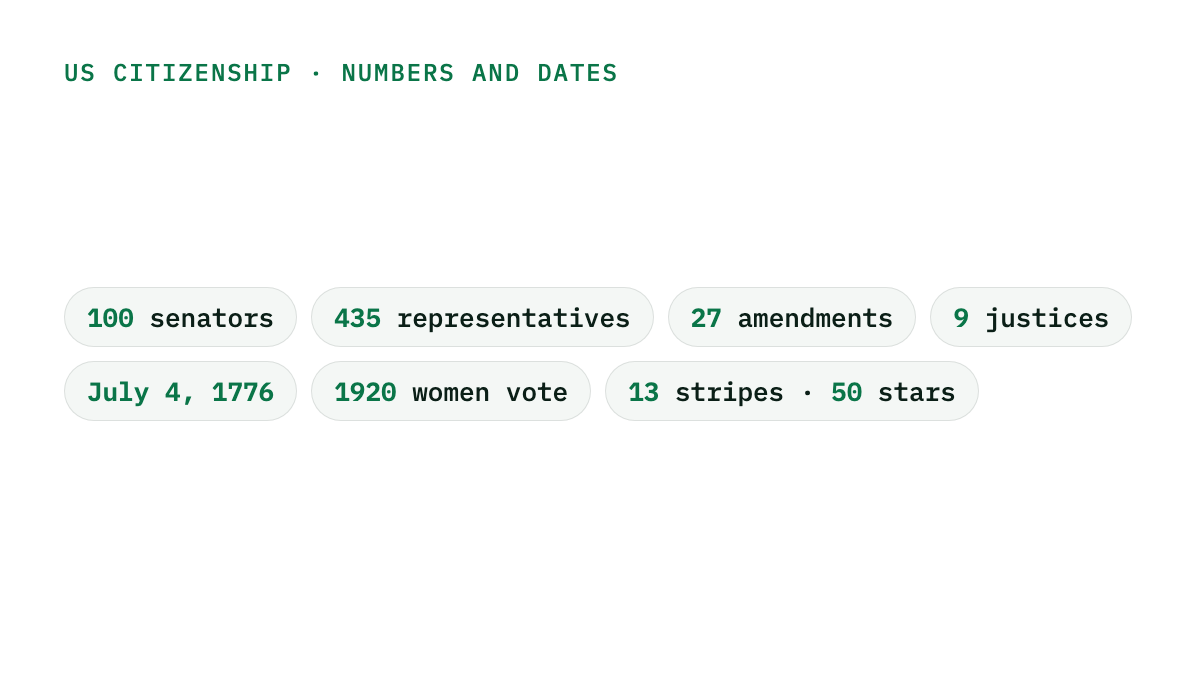
Every number and date on the civics test, on one page
Twenty-four questions on the 2025 test have a number or a year in the answer. Here they all are, grouped so they stick.
Read the guide →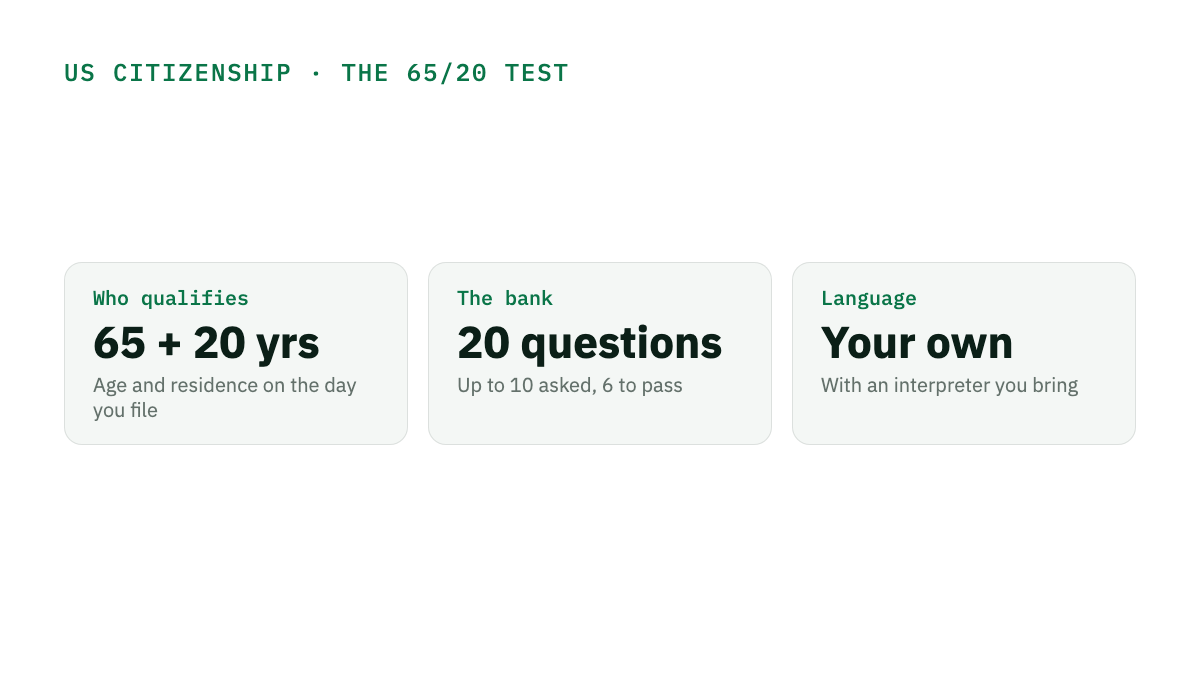
The 20 questions on the 65/20 civics test, and how the shorter test works
If you are 65 or older with 20 years as a permanent resident, your civics test comes from these 20 questions. All of them, with the accepted answers.
Read the guide →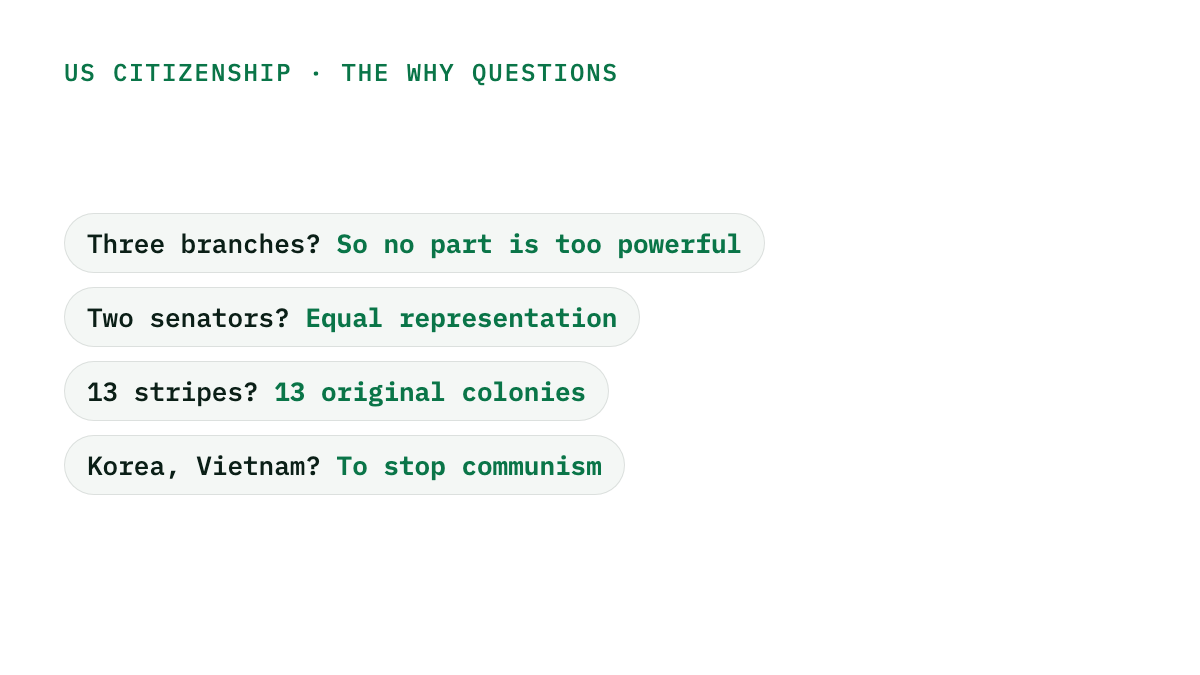
The 2025 test asks why. Here are all 17 why-questions and one answer for each.
Seventeen of the 128 questions ask for a reason, not a fact. They are the ones flashcards handle worst, and each has a short accepted answer.
Read the guide →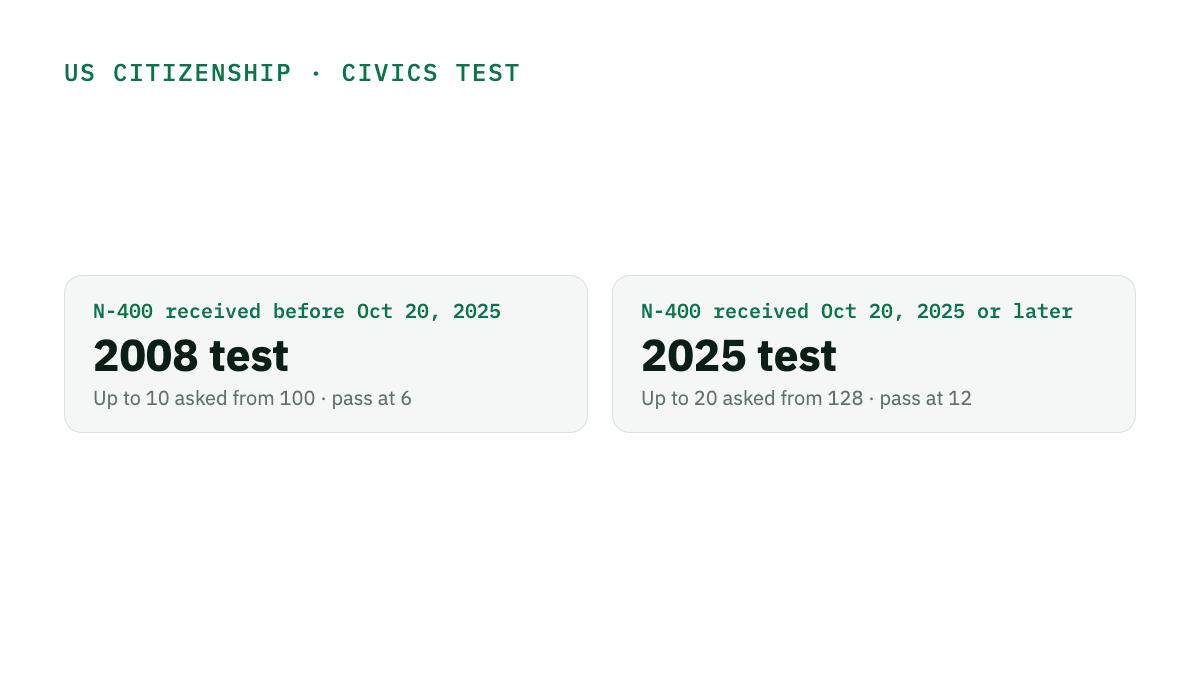
Which US civics test will I take, the 2008 or the 2025 version?
It depends on the date USCIS received your N-400, not on your interview date. The two versions side by side, with the pass rules for each.
Read the guide →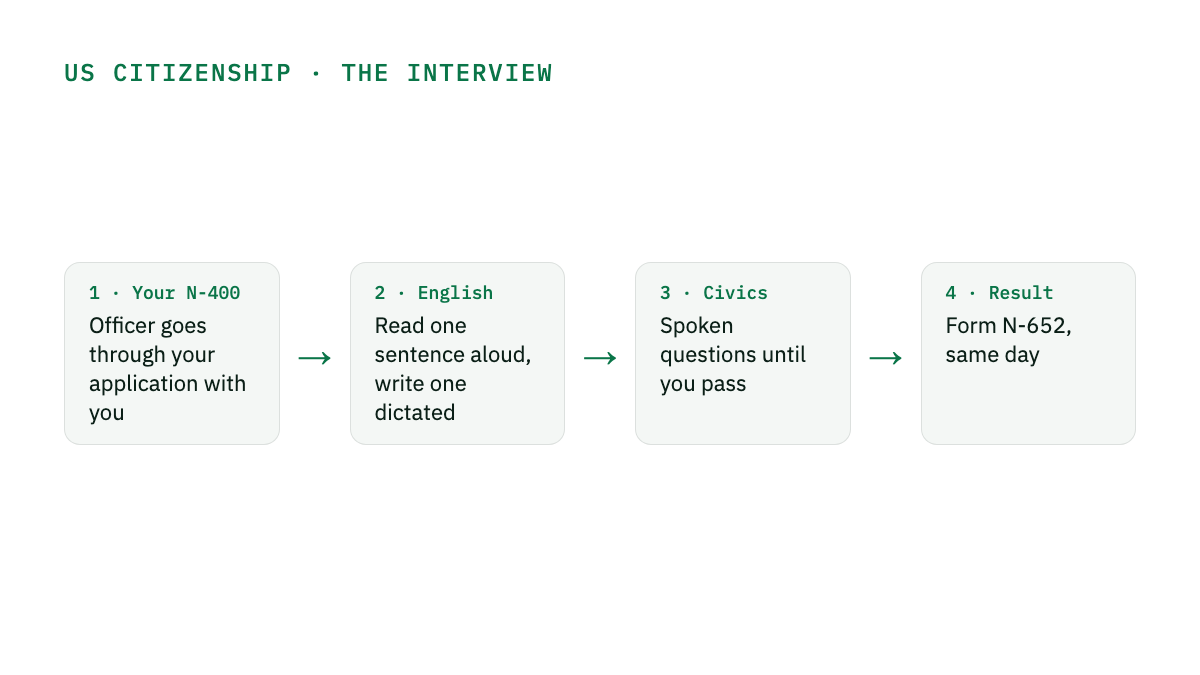
What actually happens in the naturalization interview
The N-400 review, the English test, the civics questions and the form you walk out with, in the order they happen.
Read the guide →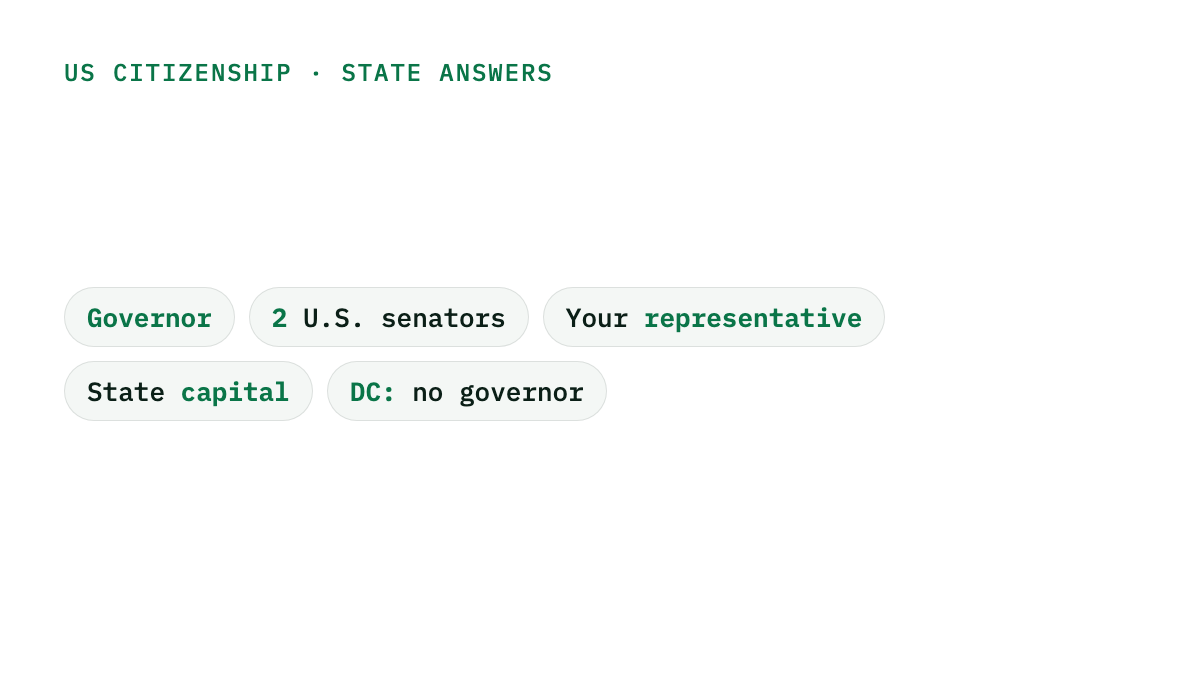
Four civics answers depend on where you live, and they change on election night
Your governor, one of your US senators, your representative and your state capital: what to answer, including in DC and the territories, and when to re-check.
Read the guide →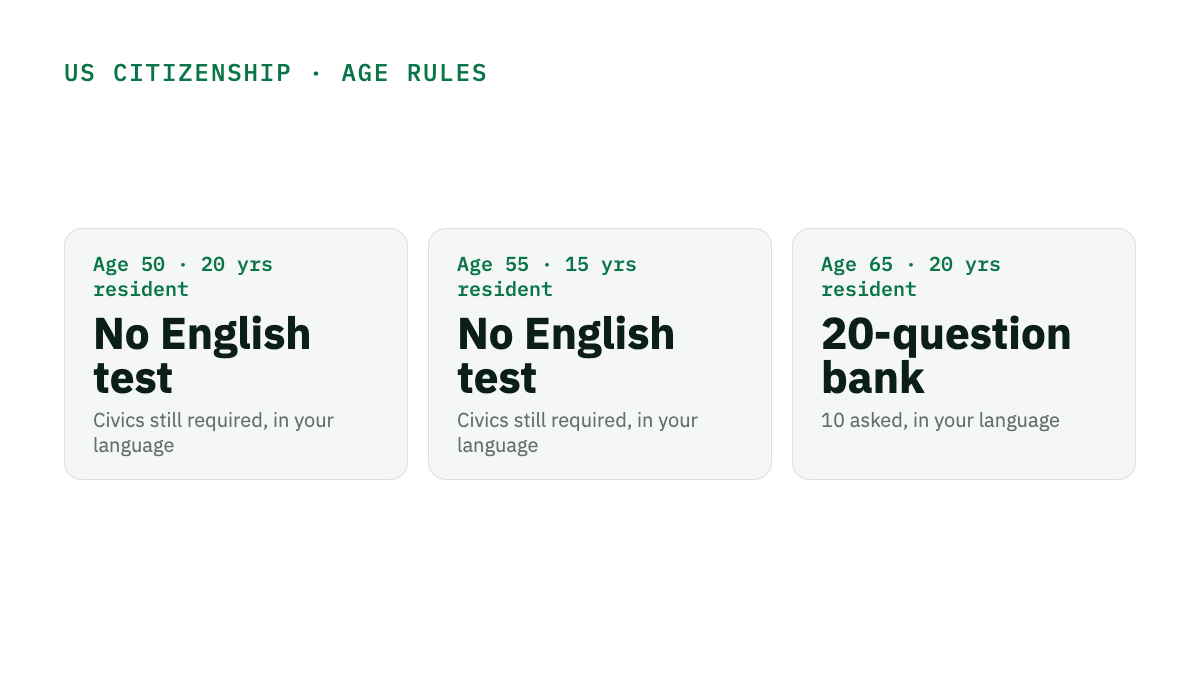
Older applicants take a different test. Here are the three age rules.
At 50/20 and 55/15 there is no English test. At 65/20 the civics test shrinks to a bank of 20. What each rule means and what still applies.
Read the guide →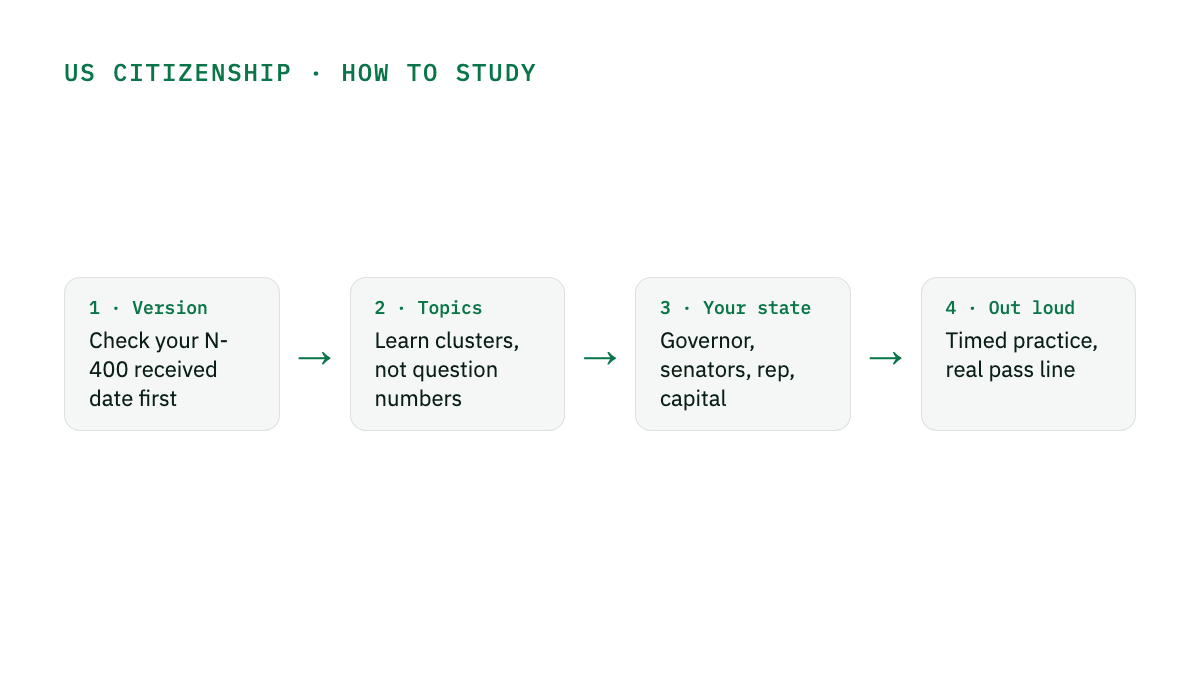
How to study for the civics test in the time you actually have
Fix your version, learn topics instead of numbers, fill in your state answers, pick one answer per question and practice out loud.
Read the guide →
The civics questions are public domain. Nobody should be renting them to you by the week.
USCIS wrote the questions, and works of the US government cannot be copyrighted. What the subscription apps are actually selling, and what we did instead.
Read the guide →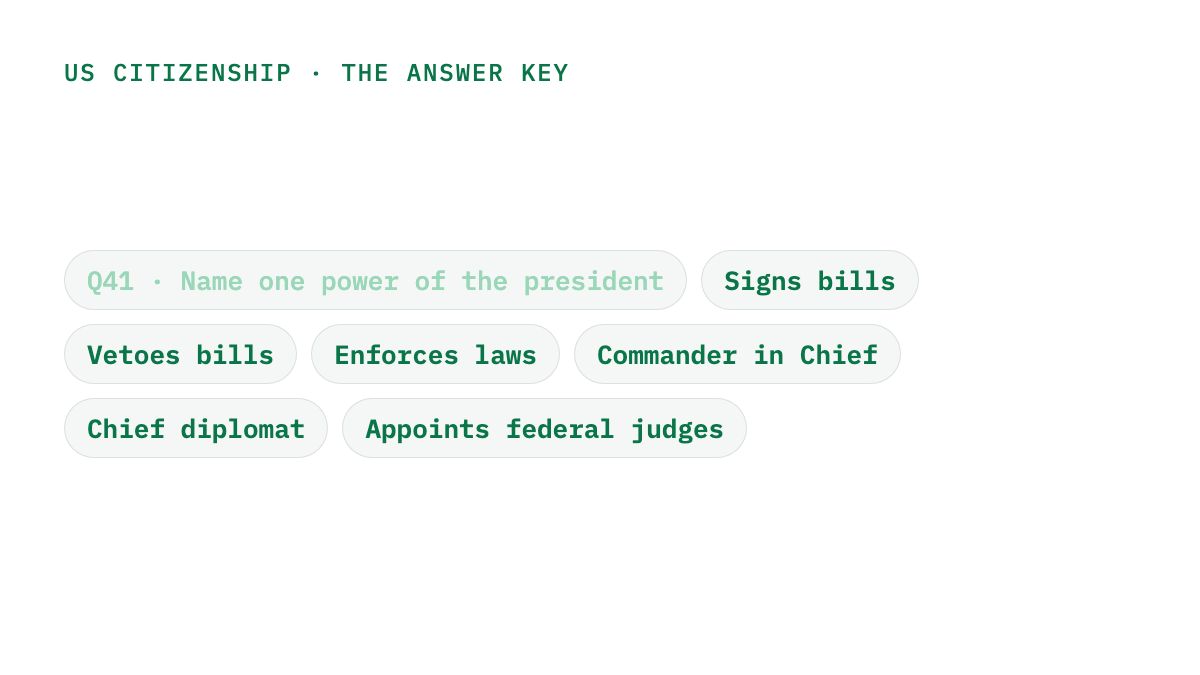
You only need one answer. 41 of the 128 questions accept four or more.
How the USCIS answer key works, what "name one" really means, and why it should change how you study.
Read the guide →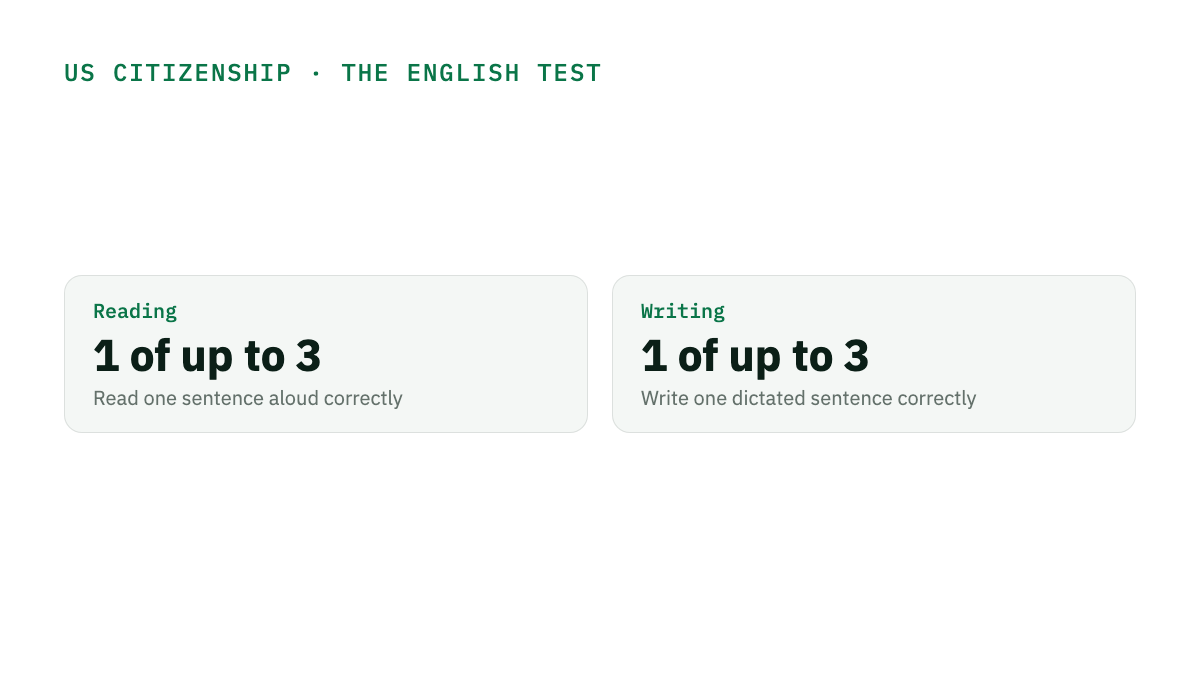
The English test is smaller than you fear: one sentence read, one sentence written
Exactly what the reading, writing and speaking parts ask, how strictly USCIS scores them, and who is exempt.
Read the guide →